
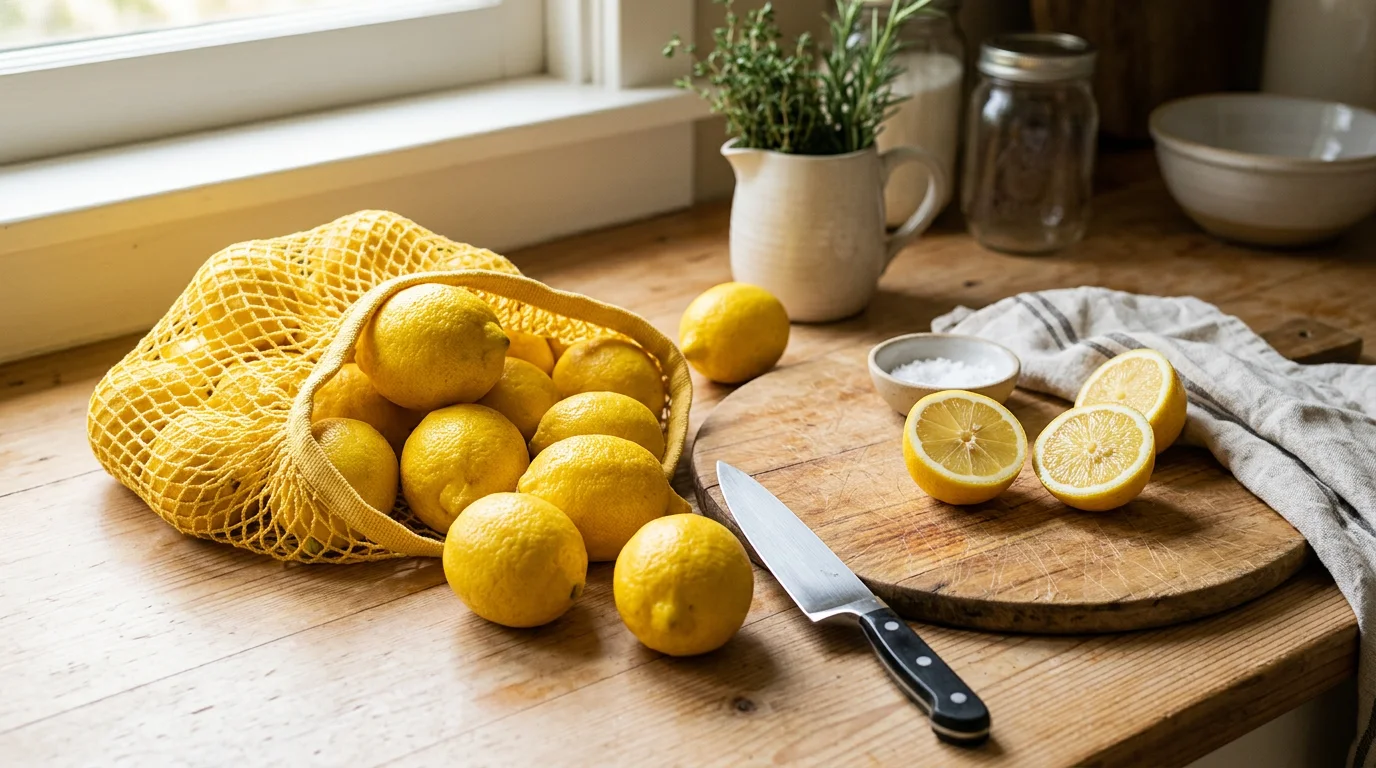
Quick answer: Split a big bag of lemons across three tracks: preserve what you can't use fast (freeze juice and zest, or make preserved lemons), cook and bake with the rest (curd, lemonade, vinaigrette, roast chicken), and use the spent halves for cleaning once you've juiced them. That way nothing sits in the crisper drawer long enough to go soft.
A bag of lemons from the store or a friend’s overproducing tree can turn into a race against time, they start softening within a week or two on the counter. The fix isn’t cooking your way through all of them in one weekend, it’s splitting the bag across three tracks: preserve, cook, and (for the scraps) clean.
Step 1: Preserve what you won’t use this week
Before anything else, set aside a portion of the bag for long-term storage so it stops being a ticking clock.
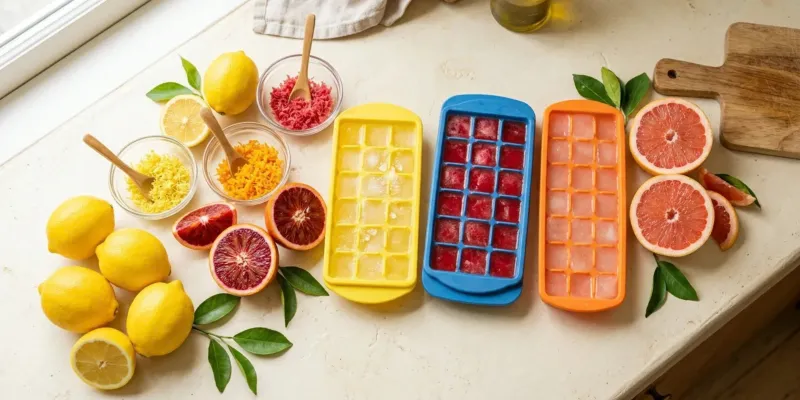
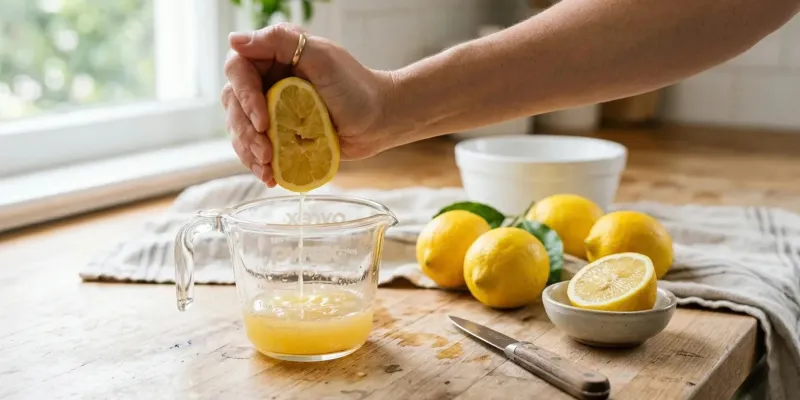
- Freeze juice and zest separately. Juice a handful of lemons, zesting each one first (see our guide on how to zest a lemon), then freeze the juice in ice cube trays and the zest in a small airtight container. Both keep for months this way, ready whenever a recipe needs them.
- Freeze whole lemons. If you’re short on time, whole lemons can go straight into the freezer and last 3 to 4 months. The texture softens once thawed, so they’re best used for juicing or zesting rather than eating fresh, but it buys real time.
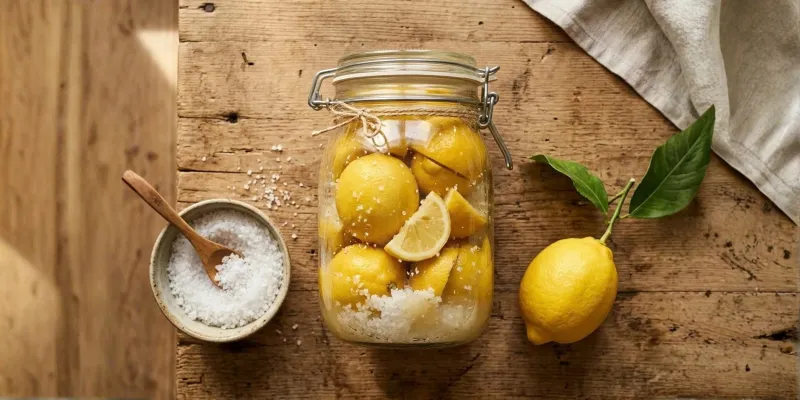
- Make preserved lemons. If you’ve got more lemons than you’ll use in the next few weeks, curing a batch in salt turns them into a pantry staple that lasts 6 months to a year. Our preserved lemons 101 guide walks through the full process, and the Moroccan-style preserved lemons recipe is a good place to start.
See our full lemon storage guide for exact timelines on whole, cut, juiced, and zested lemons.
Step 2: Cook and bake through the rest
Once some of the bag is preserved and no longer urgent, put the rest to work across a few different meals so you’re not eating the same lemon dish three nights in a row.
Drinks: a pitcher of old-fashioned lemonade is the fastest way to use several lemons at once, and it keeps in the fridge for a few days.
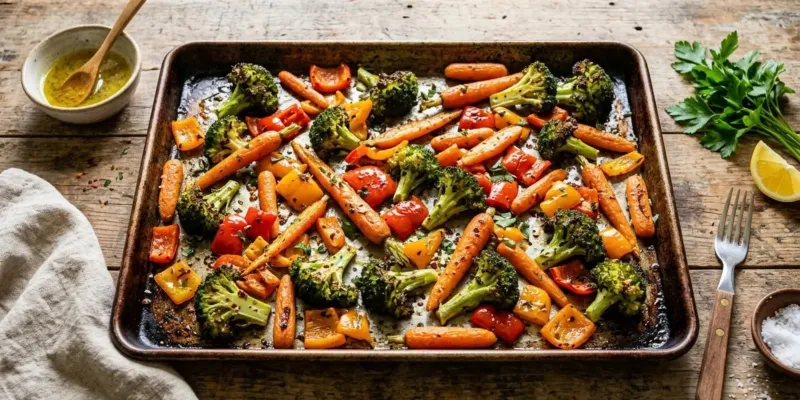
Savory sides and mains: a lemon vinaigrette over roasted vegetables uses lemon in both the dressing and as a bright finishing note, and a full sheet pan lemon chicken and vegetables dinner works several lemons into one pan.
Dips and spreads: whipped lemon hummus uses lemon juice and zest both, and keeps in the fridge for snacking through the week.
Baking: lemon curd tartlets are a good use for a larger batch of juice at once, since curd itself uses several lemons’ worth of juice in a single recipe, and any extra curd keeps well in the fridge for spreading on toast or swirling into yogurt.
Step 3: Don’t waste the spent halves
Once a lemon’s been juiced, the leftover half still has use left in it, just not in the kitchen anymore.
- Scrub a cutting board or sink. Sprinkle coarse salt on the board, then scrub with the cut side of a spent lemon half to lift stains and odors.
- Freshen a garbage disposal. Drop a spent lemon half (or a few peels) into the disposal and run it briefly, the citrus oils cut through lingering odor.
- Clean a microwave. Heat a bowl of water with a few lemon halves or slices on high for 5 to 10 minutes, which loosens baked-on splatters and leaves the inside smelling clean when you wipe it down.
A simple plan for a full bag
If you’ve got a whole bag and 30 minutes to spare, here’s a workable split: juice and freeze a third, cook or bake with a third over the next few days, and set the last third aside to cure into preserved lemons. That way nothing is racing against spoilage, and you’ve got lemon juice, zest, and a jar of preserved lemons stocked for weeks to come.






Comments
Be the first to leave a comment.