
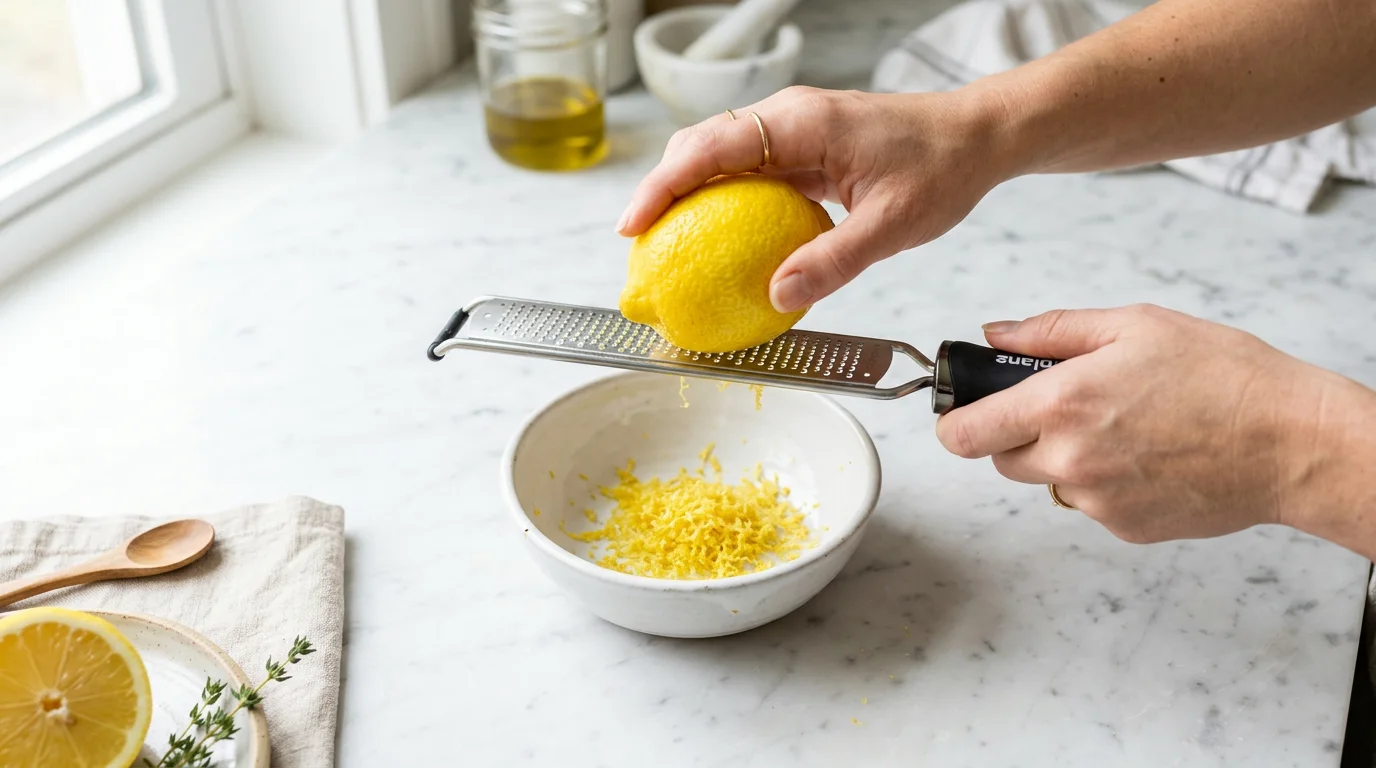
Quick answer: The best way to zest a lemon is with a microplane or rasp grater, using light, short strokes and rotating the lemon so you only take the bright yellow outer layer, never the bitter white pith underneath. No microplane? A box grater's small holes, a vegetable peeler followed by fine mincing, or even a sharp paring knife will all get you usable zest.
The fastest, cleanest way to zest a lemon is with a microplane: hold the lemon in one hand, the grater at a slight angle in the other, and drag the lemon across the blade in short strokes, rotating it as you go so you only remove the bright yellow layer and stop before you hit the bitter white pith. That’s the whole technique. Everything else below is what to do when you don’t have a microplane on hand, or when a recipe calls for a specific amount and you need to know how far one lemon will actually get you.
What you’re actually trying to remove
A lemon’s skin has two layers that matter here. The outer layer, the zest, is thin, brightly colored, and loaded with aromatic citrus oils, which is why it smells so strong the moment you start grating. Underneath it is the pith, a thick white layer that’s spongy, bitter, and not something you want in your finished dish. Every method below works by the same rule: take only the color, leave the white.
Method 1: Microplane or rasp grater (best option)
This is the tool most bakers reach for, and for good reason.
- Wash and dry the lemon first, since you’re about to eat its skin.
- Hold the microplane over a small bowl or cutting board.
- Drag the lemon across the blade in one direction, using light pressure and short strokes.
- Rotate the lemon after every few strokes so you’re always grating a fresh patch of skin, not digging deeper into pith you’ve already exposed.
- Stop when you see white starting to show through.
A microplane gives the finest, fluffiest zest, which is what you want for baking, where fine zest disperses evenly through batter instead of leaving stringy bits.
Method 2: Box grater
If a microplane isn’t in your drawer, the small holes on a standard box grater work almost as well.
- Stand the grater on a plate to catch the zest.
- Rub the lemon against the smallest-holed side, using the same light, rotating motion as with a microplane.
- Check the underside of the grater occasionally, since zest tends to cling to the blades and needs scraping off with a spoon or knife.
The zest will be slightly coarser than a microplane produces, but it works fine for most recipes.
Method 3: Vegetable peeler, then mince
A peeler removes wider strips of peel, which is useful when a recipe wants “strips of zest” (for infusing syrups or teas) but needs extra work for fine zest.
- Run the peeler along the lemon in long strokes, taking only the yellow layer.
- If you need fine zest, stack the strips and mince them finely with a chef’s knife, or pulse them with a bit of the recipe’s sugar in a food processor.
This method is also the easiest way to make candied zest or wide citrus twists for garnishing drinks.
Method 4: Paring knife
The least precise option, but it works in a pinch: use a small, very sharp knife to shave off thin sections of peel, angling the blade shallowly to avoid catching pith, then mince the pieces by hand.
Method 5: Citrus zester tool (the channel knife)
The narrow, notched tool sold specifically as a “zester” pulls off thin curls of zest in one pass. It’s mostly used for garnish, since the curls are too coarse to distribute evenly through a batter, but it’s the quickest way to get pretty strips for topping a drink or a dessert.
Quick comparison
| Method | Zest texture | Best for |
|---|---|---|
| Microplane | Fine, fluffy | Baking, dressings, general cooking |
| Box grater | Slightly coarse | Baking when no microplane is available |
| Peeler + mince | Coarse to fine, your choice | Candied zest, infusing syrups |
| Paring knife | Uneven | Emergency backup only |
| Channel/citrus zester | Wide curls | Garnish, cocktail twists |
Tips for better zest every time
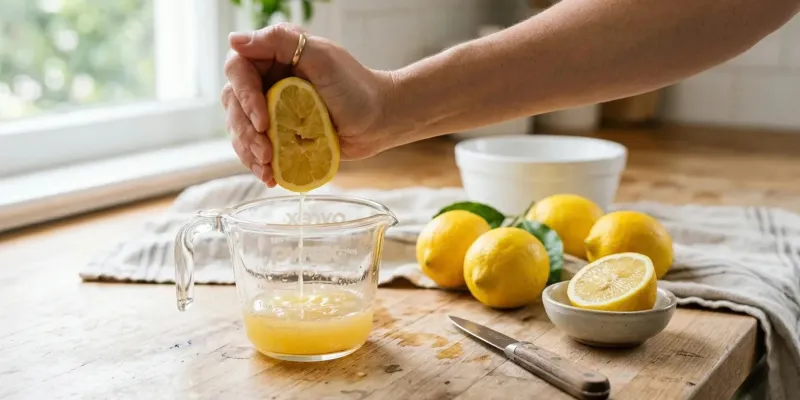
- Zest before you juice, always. Once a lemon is squeezed, the skin collapses and there’s nothing to grate against.
- Room-temperature lemons zest more easily than cold ones straight from the fridge, since the oils in the skin are more fragrant when warm.
- Rolling the lemon firmly on the counter before zesting helps loosen the oils, the same trick used before juicing.
- A little zest goes a long way. Because the oils are concentrated, even one lemon’s worth can noticeably flavor a whole batch of cookies, a cake, or a pitcher of lemonade.
- Don’t wash off the zest before using it. A quick rinse and dry beforehand is enough; there’s no need to scrub it after grating.
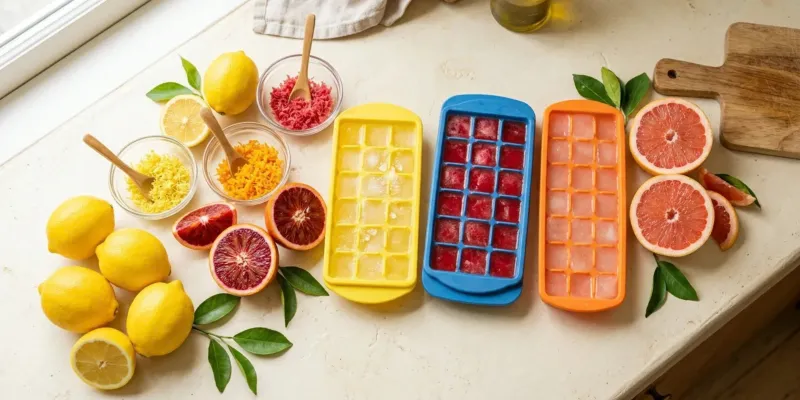
Once you’ve got a bowl of fresh zest, it’s ready to go straight into batter for lemon poppy seed muffins, stirred through the crust of chewy lemon bars, or folded into the glaze on a classic lemon pound cake. If you’ve zested more than you need, pack the extra into a small airtight container. It keeps in the fridge for about a week, or in the freezer for up to four months, so it’s rarely wasted.





Comments
Be the first to leave a comment.