
Calories and Protein in Chicken Breast
Nutrition data for chicken breast, roasted, meat only, no skin.
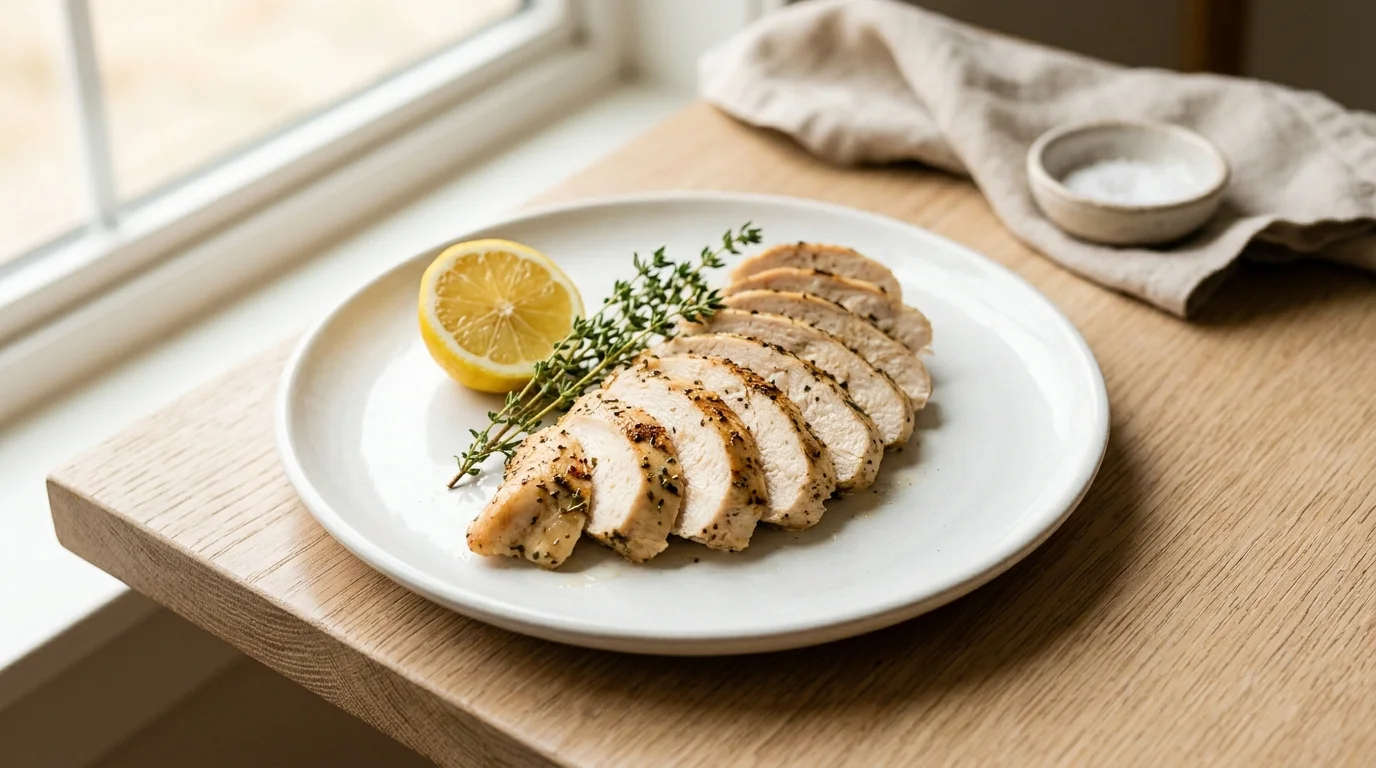
Quick answer: 3 ounces (85 g) of chicken breast has about 140 calories, 26 g of protein, 3 g of fat and 0 g of carbohydrate. Per 100 g it has 165 calories and 31 g of protein. These figures are for chicken breast that is roasted, meat only, no skin.
- 140calories
- 26 gprotein
- 3 gfat
- 0 gcarbs
per 3 ounces (85 g)
Serving sizes for chicken breast
| Serving | Weight | Calories | Protein | Fat | Carbs |
|---|---|---|---|---|---|
| 100 grams | 100 g (3.5 oz) | 165 | 31 g | 3.6 g | 0 g |
| 3 ounces (85 g) | 85 g (3 oz) | 140 | 26 g | 3 g | 0 g |
| 1/2 breast, no skin or bone | 86 g (3 oz) | 142 | 27 g | 3.1 g | 0 g |
| 1 cup, chopped or diced | 140 g (4.9 oz) | 231 | 43 g | 5 g | 0 g |
Weigh chicken after cooking when you can. Cooking drives water out, so cooked meat weighs less than the raw piece it came from, and USDA's 3 ounce serving (85 g) is cooked weight, about the size of a deck of cards. Half a breast without skin or bone is about 86 g.
Full nutrition facts
| Nutrient | Per 100 g | Per 3 ounces (85 g) | % Daily Value* |
|---|---|---|---|
| Calories | 165 | 140 | |
| Total fat | 3.6 g | 3 g | 4% |
| Saturated fat | 1 g | 0.9 g | 4% |
| Cholesterol | 85 mg | 72 mg | 24% |
| Sodium | 74 mg | 63 mg | 3% |
| Total carbohydrate | 0 g | 0 g | 0% |
| Protein | 31 g | 26 g | 53% |
| Potassium | 256 mg | 218 mg | 5% |
| Calcium | 15 mg | 13 mg | 1% |
| Iron | 1 mg | 0.9 mg | 5% |
| Magnesium | 29 mg | 25 mg | 6% |
*Percent Daily Value uses the FDA reference amounts for a 2,000 calorie diet and is calculated for 3 ounces (85 g). Source: USDA FoodData Central, record 171477 (Chicken, broilers or fryers, breast, meat only, cooked, roasted).
Serving calculator
Enter an amount to see the calories and protein for exactly what you are eating.
- -calories
- -g protein
- -g fat
- -g carbs
About chicken breast nutrition
Chicken breast is the leaner of the two chicken cuts on this site, with more protein and less fat per 100 g than thigh meat. The numbers below are for cooked breast meat with the skin removed.
- Protein: 26 g in 3 ounces (85 g), about 53 percent of the Daily Value.
How preparation changes the numbers
- Skin, breading and frying oil change the numbers a lot. These figures are for roasted meat only, with no skin.
- Use a food thermometer. FoodSafety.gov lists 165°F as the safe minimum internal temperature for all poultry.
How chicken breast compares
Per 100 g, chicken breast ranks #1 of 30 foods on this site for protein and #25 for fewest calories.
Protein per 100 g
Calories per 100 g
Recipes with chicken breast
Questions about chicken breast
140 calories in 3 ounces (85 g) of chicken breast, or 165 calories per 100 g. These figures are for chicken breast that is roasted, meat only, no skin.
26 g of protein in 3 ounces (85 g) of chicken breast, or 31 g per 100 g. Protein makes up about 75 percent of its calories.
Per 100 g of cooked meat, breast has 31 g of protein and thigh has 25 g. Thigh has more fat: 8.2 g per 100 g versus 3.6 g.
About 27 g of protein in half a cooked breast (86 g), with about 142 calories.
Either works if you use the matching numbers. Raw chicken weighs more than cooked because water cooks out, so a raw weight and a cooked weight are not interchangeable. These figures are for cooked meat.
Related guides


Work out your own numbers
More in chicken, fish and eggs
Sources and method
Nutrient values come from USDA FoodData Central (SR Legacy), record 171477: Chicken, broilers or fryers, breast, meat only, cooked, roasted, retrieved 2026-09-30. Serving weights are USDA household measures, or a simple fraction of one. Brands, growing conditions and cooking method change real-world numbers, so treat every figure as a good estimate. Written and reviewed by Claudio; read how we develop and check our numbers.