
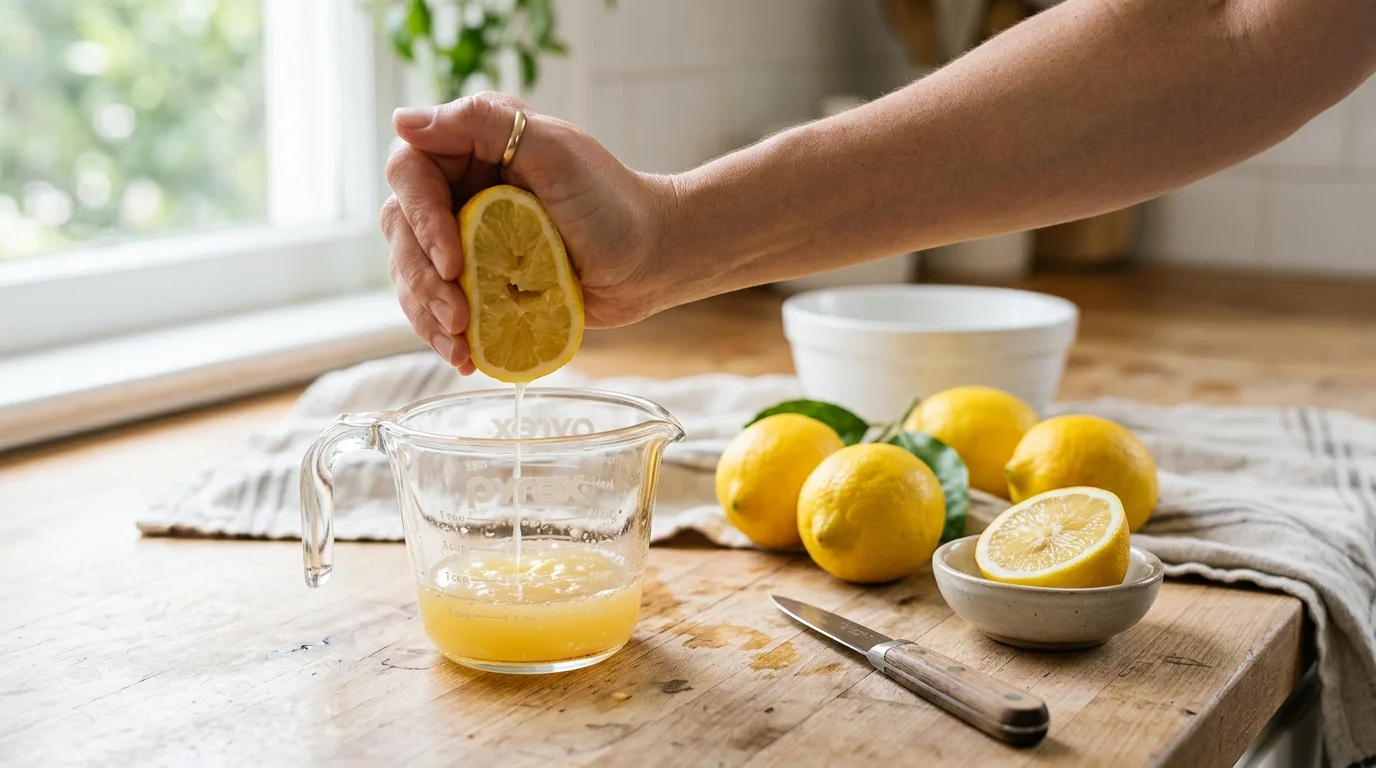
Quick answer: One medium lemon yields about 3 tablespoons of juice, a small lemon closer to 2 tablespoons, and a large lemon up to 4 tablespoons. To fill a full cup of lemon juice, plan on roughly 5 medium lemons, 4 large, or 8 small ones.
A medium lemon gives you about 3 tablespoons of juice, which is the number worth memorizing since most recipes are written around a “medium” lemon without saying so. Size changes that number more than people expect, and knowing roughly what you’re working with saves you from juicing a whole bag of lemons only to come up short.
Juice yield by lemon size
| Lemon size | Juice yield |
|---|---|
| Small (under 2 oz) | 2 to 2.5 tablespoons |
| Medium (2 to 3 oz) | 3 tablespoons |
| Large (3 to 4 oz) | 4 tablespoons (about 1/4 cup) |
| Extra-large | Up to 5 tablespoons |
These are averages. Freshness matters as much as size, a firm, juicy lemon at its peak will out-yield a larger lemon that’s started to dry out.
How many lemons for a specific amount
Recipes usually call for juice in tablespoons or cups rather than “juice of one lemon,” so here’s the quick math:
| You need | Medium lemons | Large lemons |
|---|---|---|
| 2 tablespoons | 1 (with a little extra) | 1 |
| 1/4 cup (4 tbsp) | 1.5 | 1 |
| 1/2 cup | 3 | 2 |
| 1 cup | 5 | 4 |
For a pitcher of old-fashioned lemonade, that means roughly 5 medium lemons per cup of fresh juice, which is why lemonade recipes often ask you to buy lemons “by the bag” rather than counting out a precise number.
How to get the most juice out of each lemon
A few small habits make a real difference in yield:
- Use room-temperature lemons. Cold lemons straight from the fridge release less juice. If yours are chilled, microwave them for 10 to 15 seconds first.
- Roll before you cut. Press down firmly and roll the whole lemon back and forth on the counter for about 10 seconds. This breaks down the membranes inside without damaging the skin, and it’s the single biggest lever you have.
- Cut lengthwise, not crosswise, for a reamer. If you’re using a handheld reamer, cutting the lemon pole-to-pole (through the stem end) exposes more of the membrane to the reamer’s ridges.
- Squeeze cut-side down over your hand or a strainer to catch seeds and pulp without losing juice.
- Use a citrus press for the most consistent results. A hinged citrus press extracts more juice with less effort than squeezing by hand, especially for smaller lemons that are awkward to grip.
Fresh juice vs. bottled
Bottled lemon juice measures the same by volume and works fine for a quick weeknight sauce, but it’s missing the aromatic oils that live in the zest and skin, which is a big part of what makes lemon taste like lemon rather than just “sour.” For anything where lemon is the main flavor, like a lemon chicken piccata or a bright lemon vinaigrette, fresh juice makes a noticeable difference, and since you’re cutting the lemon open anyway, zesting it first (see our guide to zesting a lemon) means you get both the juice and the zest from the same fruit.
What to do with extra juice
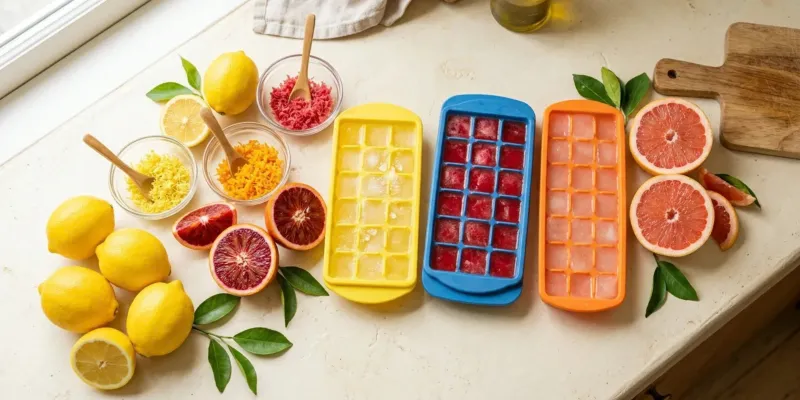
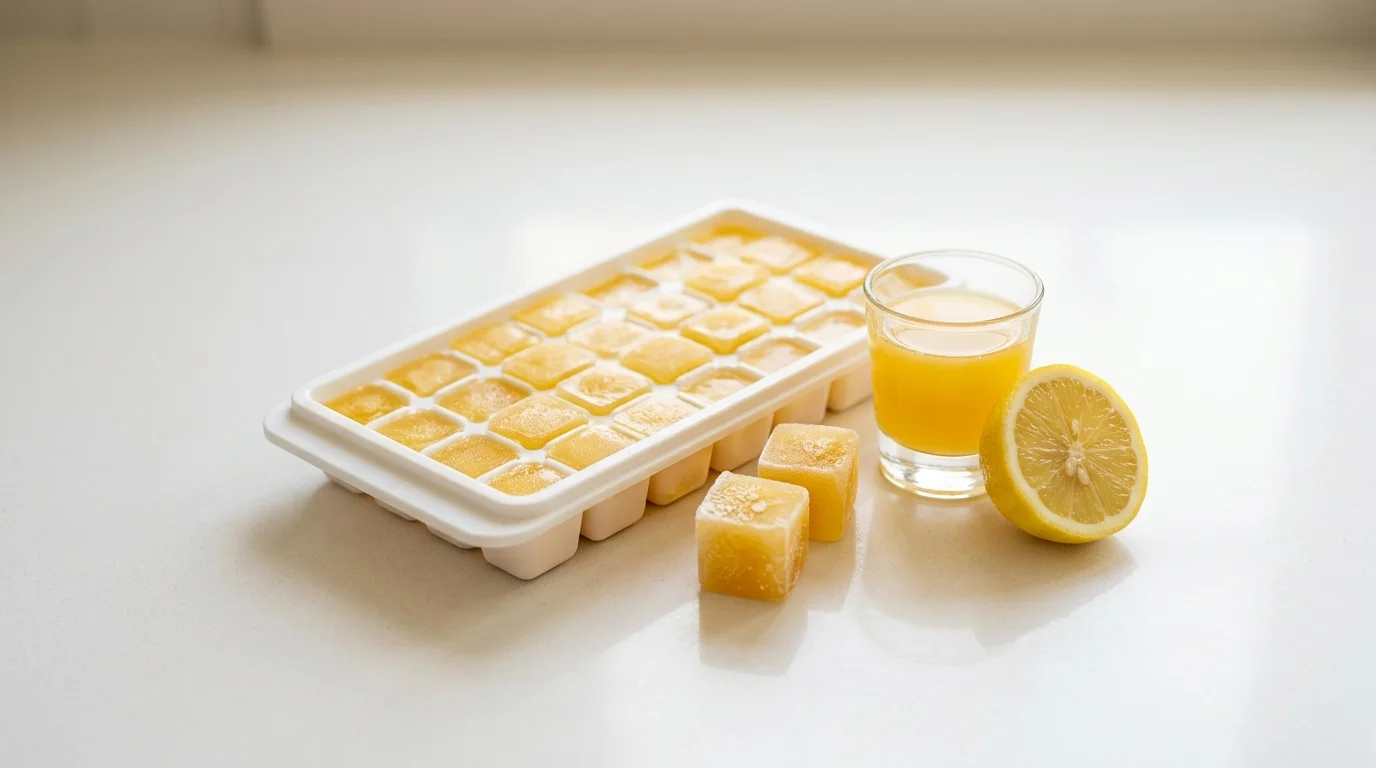
If a recipe leaves you with leftover lemons or extra juice, it keeps in an airtight container in the fridge for up to two weeks, or in ice cube trays in the freezer for months, so measuring out exactly what you need for tonight’s recipe and saving the rest is almost never wasteful.





Comments
Be the first to leave a comment.