
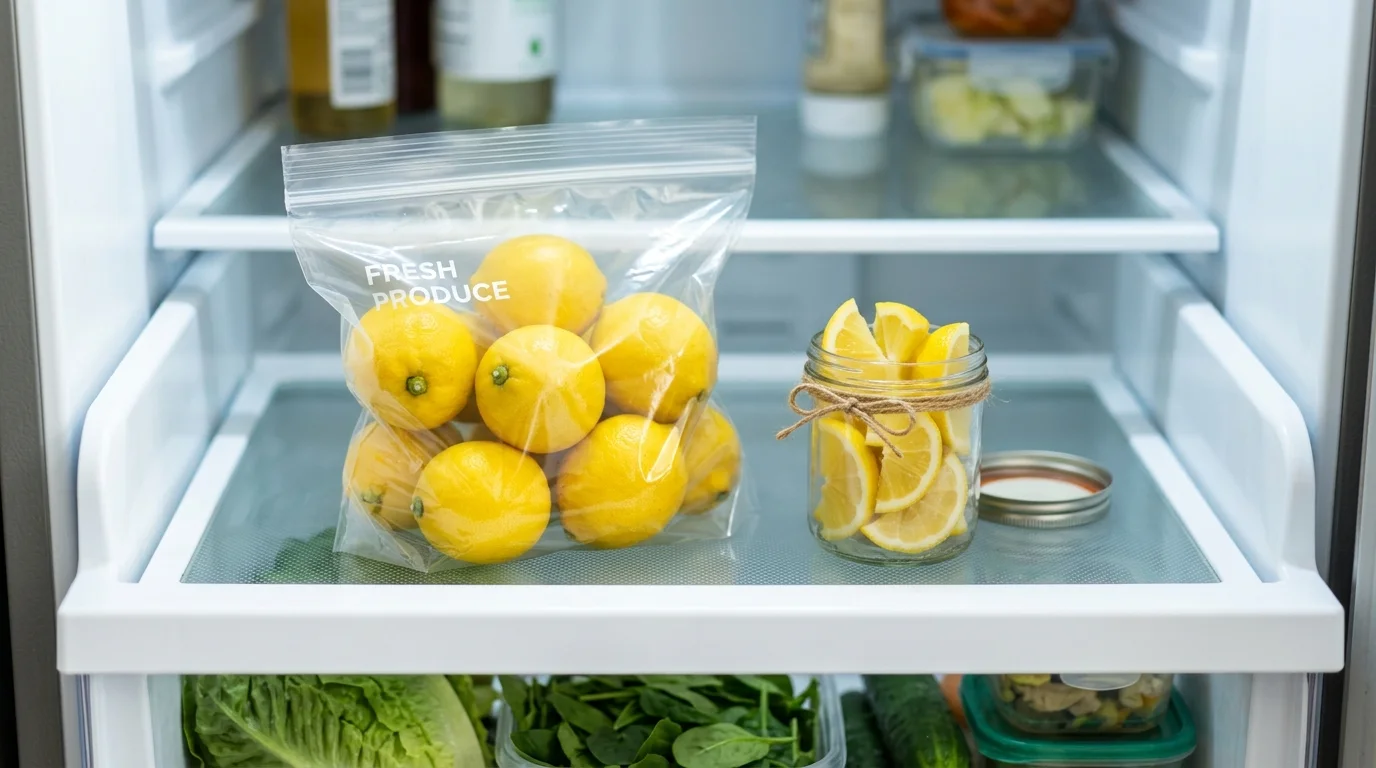
Quick answer: Whole lemons last longest in the fridge crisper drawer sealed in a bag or airtight container, keeping fresh for up to a month, versus just 4 to 5 days left out on the counter. Once cut, juiced, or zested, lemons and their parts each have their own shelf life, from a few days for cut wedges to several months for frozen juice or zest.
If you want lemons to last, the fridge beats the counter every time: a whole lemon sealed in a bag or airtight container in the crisper drawer stays fresh for up to a month, compared to just 4 to 5 days sitting out at room temperature. The trick isn’t just refrigeration, it’s sealing them so they don’t dry out, and knowing that every form a lemon takes, whole, cut, juiced, or zested, has its own separate shelf life.
Whole lemons
| Storage method | How long they last |
|---|---|
| Counter, room temperature | 4 to 5 days |
| Fridge, loose in crisper drawer | About 2 weeks |
| Fridge, sealed in a bag or airtight container | Up to 1 month |
| Freezer, whole | 3 to 4 months |
The sealed bag matters more than people expect. An open crisper drawer still lets lemons dry out over time, while a sealed container traps moisture in and keeps the skin from shriveling. If you only have a few lemons and plan to use them within the week, the counter is fine; for anything longer, refrigerate.
What to avoid: don’t store lemons next to apples, bananas, or other fruit that gives off ethylene gas as it ripens. That gas speeds up spoilage in nearby produce, lemons included, so keep citrus in its own bin or bag, ideally with other citrus rather than mixed fruit.
Cut lemons and wedges
Once a lemon is cut, the clock speeds up considerably.
- Lemon halves or wedges: wrap tightly in plastic wrap or store in an airtight container in the fridge, and use within 2 to 3 days. The cut surface dries out and can develop mold faster than whole fruit.
- A quick trick for cut lemons: press the cut side onto a small plate or saucer in the fridge, which slows moisture loss better than leaving it exposed.
Lemon juice
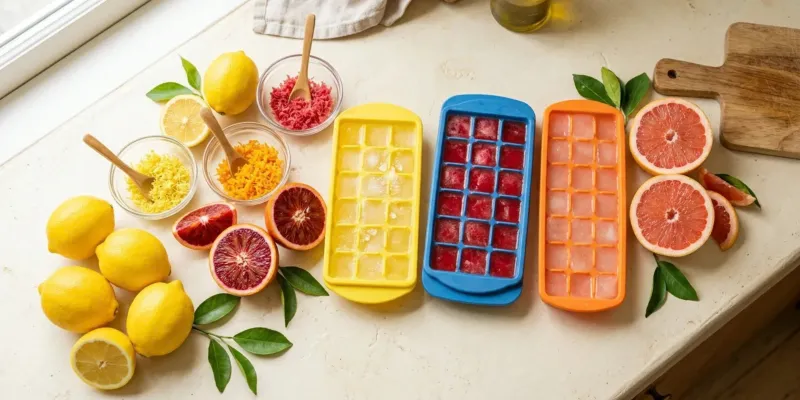
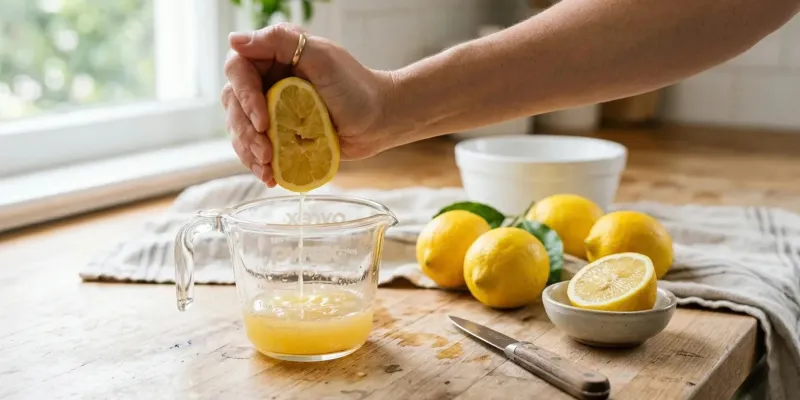
Fresh-squeezed juice keeps in an airtight container in the fridge for about 2 weeks. For longer storage, pour it into ice cube trays, freeze, then transfer the cubes into a freezer bag or container, where it will hold its flavor for several months. This is the easiest way to always have a splash of lemon juice on hand for a marinade or a mug of hot lemon honey ginger tea without juicing a fresh lemon every time.
Lemon zest
Zest is more perishable than it looks, since the aromatic oils that make it valuable start fading once removed from the fruit.
- Fridge: up to 1 week in a small airtight container.
- Freezer: up to 4 months, and it can be used straight from frozen without thawing, which makes it worth zesting extra whenever you have a lemon open (see our guide on how to zest a lemon).
Storing a big batch
If you’ve got a bag of lemons and know you won’t get through them all fresh, the most efficient approach is to process them in one pass: juice half, zest what you juice before squeezing, freeze both separately, and store the rest whole in a sealed bag in the crisper. That way nothing dries out waiting to be used, and you’ll always have juice and zest ready for things like a batch of lemon apple cider vinegar shots or a quick whipped lemon hummus without starting from scratch.
Signs a lemon has gone bad
A lemon is past its best when the skin turns soft, wrinkled, or develops soft brown or dark spots, or if you notice any mold, which most often shows up as white or green fuzz near the stem end. A lemon that’s just lost a little firmness but shows no mold and still smells fresh is usually fine to juice, even if it’s not appealing to eat or zest as-is.





Comments
Be the first to leave a comment.