
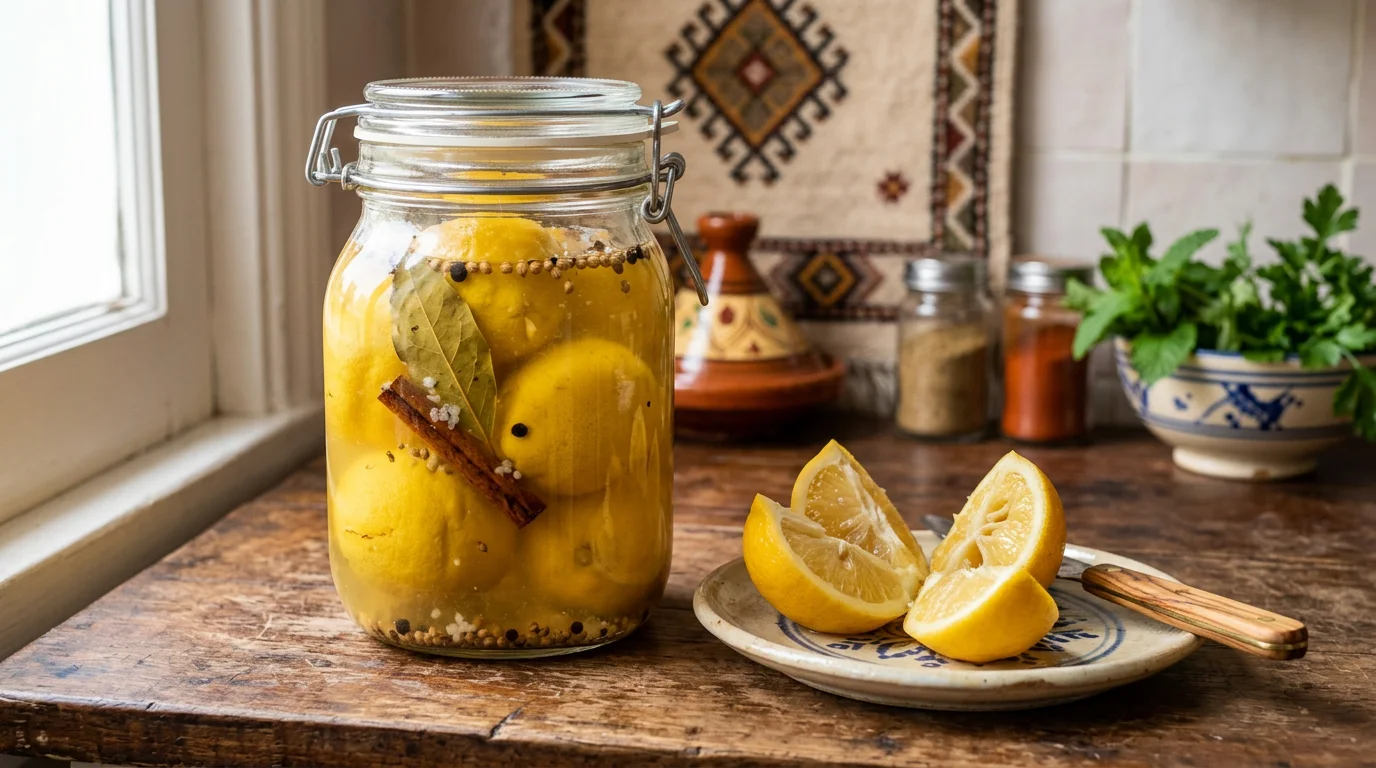
Quick answer: Preserved lemons are whole lemons cured in salt and their own juice for several weeks until the peel turns soft, salty, and deeply savory, a traditional technique in North African cooking. They're made with just lemons and salt, take about 15 minutes of hands-on time, and once cured, add a briny, umami-rich depth to stews, dressings, and roasted dishes that fresh lemon can't replicate.
Preserved lemons are exactly what they sound like: whole lemons packed in salt and left to cure in their own juice until the peel turns soft, salty, and deeply savory. It’s a traditional preservation method rooted in North African cooking, particularly Moroccan cuisine, and it turns an ordinary lemon into something closer to a condiment, with a flavor fresh lemon simply can’t produce.
What makes them different from fresh lemon
Fresh lemon brings sharp, bright acidity. Preserved lemon brings something rounder and more complex: salty, tangy, and faintly funky in the best way, closer to a fermented or cured ingredient than a fruit. The weeks-long cure softens the tough peel into something almost jammy, while mellowing the lemon’s sharpness into a deep, umami-leaning flavor. It’s not a substitute for fresh lemon juice in a recipe, it’s a different ingredient entirely, used for a different purpose.
How to make preserved lemons
The ingredient list is short: lemons and salt. That’s genuinely most of it.
- Wash the lemons well, since the whole fruit, peel included, is going into the jar.
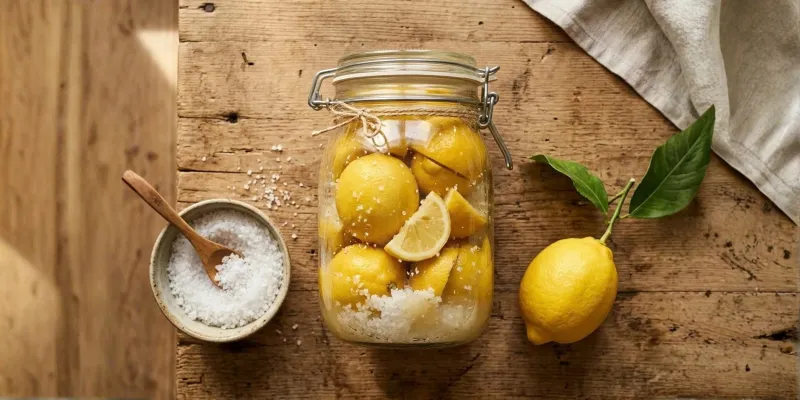
- Cut a deep cross into each lemon, slicing from the top down to about 2cm from the base, so the lemon opens into four attached quarters without falling apart.
- Pack each lemon with salt. Stuff a generous spoonful of coarse salt into the cuts of each lemon, then press it into a clean, sterilized jar.
- Add more salt and lemon juice as you go, pressing the lemons down firmly so they release their own juice, which combines with the salt to form the curing brine.
- Top off with extra lemon juice if needed, until the lemons are fully submerged. This matters, any exposed part of the lemon above the brine line is more likely to spoil.
- Seal and store at room temperature (a cool pantry works well) for 3 to 4 weeks, shaking or turning the jar every few days to redistribute the salt and juice.
- Move to the fridge once cured, where the jar will keep for 6 months to a year.
Our Moroccan-style preserved lemons recipe walks through exact quantities and timing if you want a full recipe to follow rather than working from the general method above.
How to use preserved lemons
Once cured, preserved lemon peel becomes a flavor bomb you can reach for the way you’d reach for a jar of capers or olives.
- Rinse first if you want to control saltiness. A quick rinse under water removes surface salt, useful if the rest of your dish is already well-seasoned.
- Discard or scrape the pulp. Most recipes call for using just the peel, finely chopped or sliced, while the intensely salty pulp is scraped out and either discarded or reserved for seasoning something else.
- Stir it into dressings and sauces. A little finely chopped preserved lemon peel stirred into a vinaigrette, a yogurt sauce, or mayonnaise adds a savory brightness plain lemon can’t match.
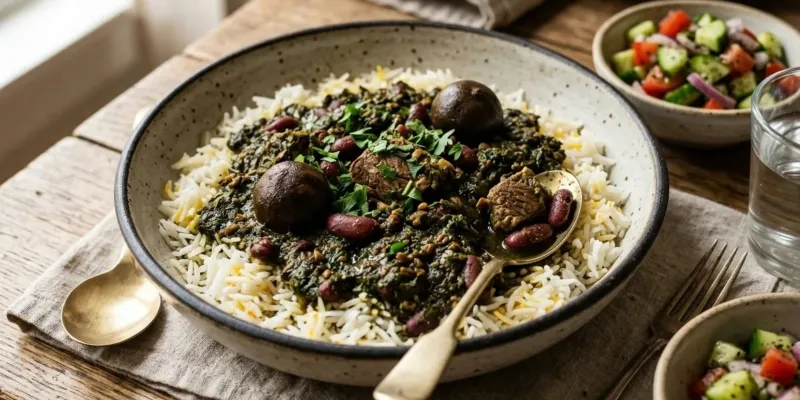
- Add it to stews and braises. This is where preserved lemon really shines, its flavor deepens further as it simmers into a dish, which is exactly the role it plays in a Persian-style herb stew with dried lime, a related North African and Middle Eastern preservation tradition using a different citrus.
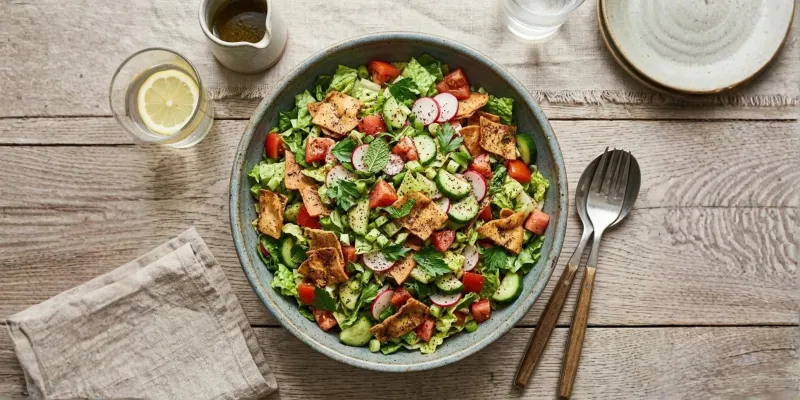
- Toss it into salads. Finely diced preserved lemon peel adds a briny punch to a grain salad or a vegetable salad like Palestinian-style fattoush, where a little goes a long way against fresh herbs and crisp vegetables.
- Pair it with rich, fatty proteins. Preserved lemon cuts through richness well, making it a natural match for roasted or grilled meats, and it works especially well with oily fish.
A note on patience
The 3 to 4 week wait is the one real obstacle to making preserved lemons at home, there’s no meaningful shortcut, the peel needs that time to actually soften and the flavor needs time to develop. The upside is that a single batch, made once, lasts up to a year in the fridge, so it’s a project worth doing in bulk rather than one jar at a time.

Comments
Be the first to leave a comment.