
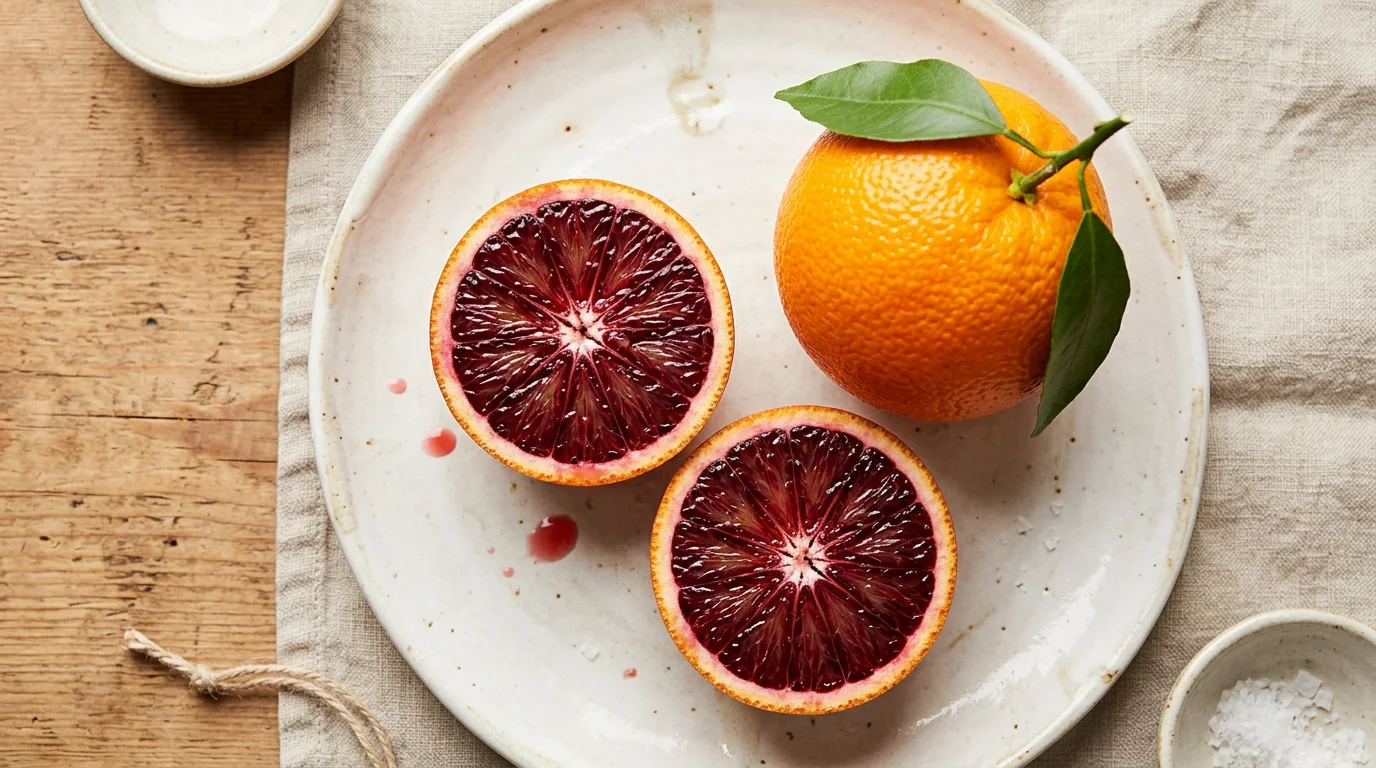
Quick answer: A blood orange is a natural mutation of the sweet orange with deep red flesh, caused by anthocyanins, a pigment family more common in berries than citrus. It tastes more tart and complex than a regular orange, with a subtle raspberry-like undertone, and is only in season in the US from roughly December through April.
A blood orange is a natural mutation of the sweet orange, distinguished by deep red flesh that comes from anthocyanins, a pigment family far more common in berries and grapes than in citrus. It tastes noticeably different from a regular orange too: more tart, less uniformly sweet, with a subtle raspberry-like undertone that makes it worth seeking out specifically, not just a colorful stand-in for a navel orange.
Where the color actually comes from
The red pigment is chrysanthemin, an anthocyanin compound that citrus doesn’t normally produce. It only develops when the fruit experiences cool nighttime temperatures during ripening, generally below about 54°F. That’s why Sicily, with its Mediterranean climate and cool winter nights, and select California growing regions produce the most vividly colored blood oranges, while fruit grown in consistently warm climates can stay mostly orange inside despite being the same variety.
The three main varieties
| Variety | Season | Color | Flavor |
|---|---|---|---|
| Moro | December-January | Darkest red, almost burgundy juice | Rich, with the most pronounced raspberry-like notes |
| Tarocco | January-March | Less deeply red than Moro | Sweeter, often considered the best-tasting of the three |
| Sanguinello | February-April | Milder color | Mildest flavor, latest in the season |
Moro kicks off the season, Tarocco is Italy’s most widely grown variety and tends to get the most praise for flavor, and Sanguinello extends availability into spring as the other two wind down.
Flavor: how it’s actually different
A regular navel orange is straightforwardly sweet. Blood orange is more complex: tart with a subtle bitterness, especially in the zest, and that raspberry or berry-like undertone that some describe as a cross between orange and pomegranate. It’s a genuinely different eating experience, not just a red-colored version of the same sweetness.
When you can actually find them
Blood oranges are in season in the US roughly December through April, with February and March generally offering the best selection and quality as Moro and Tarocco overlap. Outside that window, they’re difficult to find fresh even at well-stocked grocery stores, which is part of why they feel like a genuine seasonal treat rather than a year-round staple like a regular orange.
Using them in the kitchen
Blood orange juice and zest work in almost anything a regular orange would, with two things worth knowing:
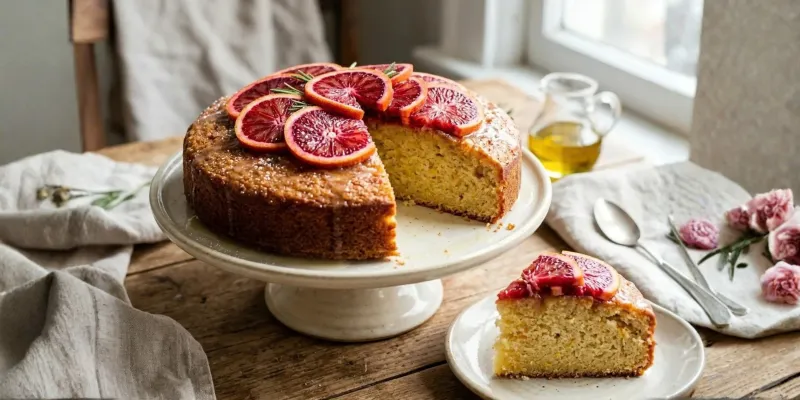
- The red color fades when heated. Bake a blood orange into a cake, like our blood orange olive oil cake, and the crumb comes out pale golden, not red. If you want the color to show, lean on a raw application, a glaze, or a garnish of fresh slices instead of expecting the color to survive baking.
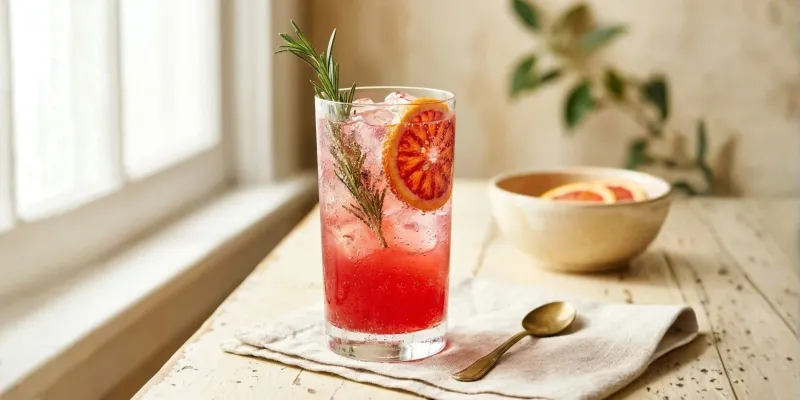
- It holds its color raw and cold. In something like our blood orange spritz, the juice stays vividly pink-red since it’s never heated, which is exactly where blood orange’s color is worth showing off.
A brief origin note
Blood oranges are believed to have first appeared in the Mediterranean, with documented natural mutations dating back centuries. Sicily in particular has cultivated them for so long and so distinctly that its blood oranges received EU Protected Geographical Indication status in 2010, officially recognizing “Arancia Rossa di Sicilia” as a regionally distinct product, similar to how Champagne or Parmigiano-Reggiano are protected by origin.


Comments
Be the first to leave a comment.