
Blood Orange Olive Oil Cake
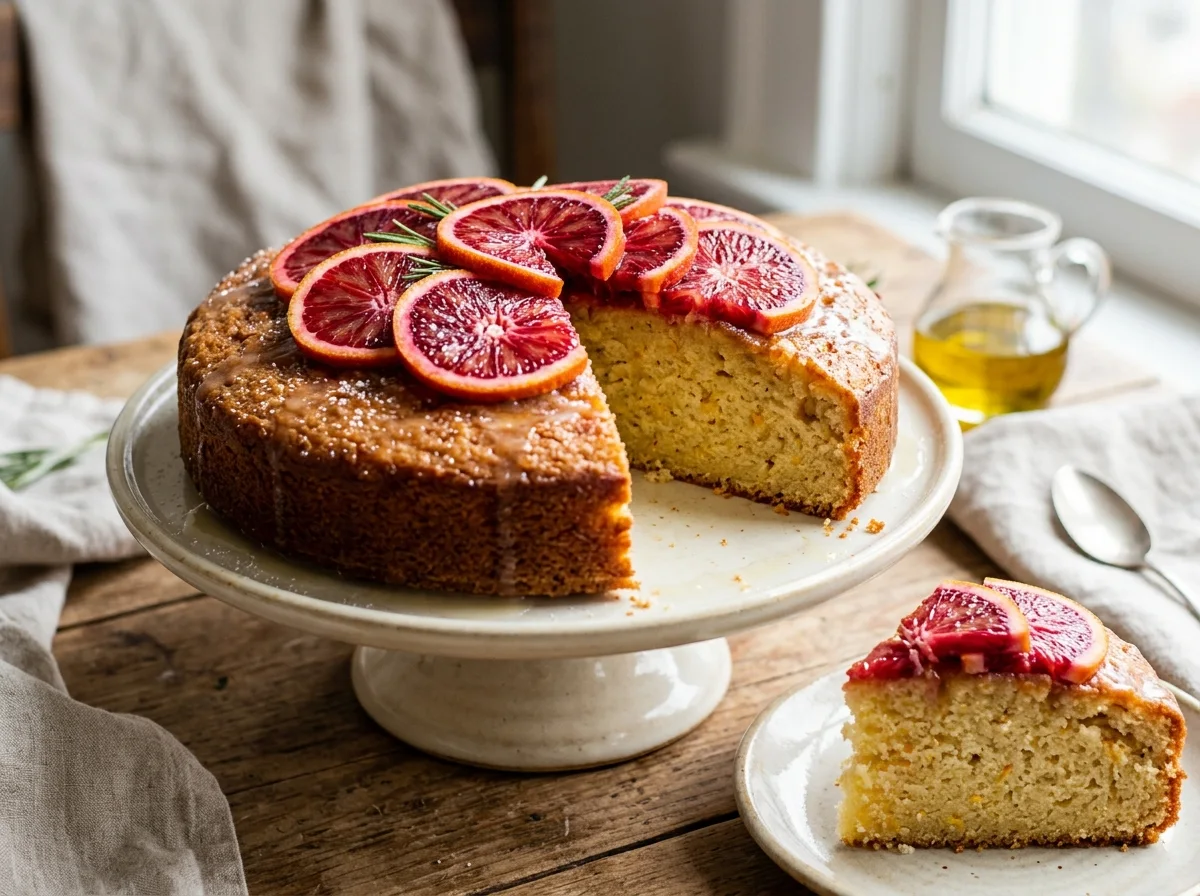
A blood orange olive oil cake beats eggs and sugar into a fluffy base, then folds in good olive oil, yogurt, and fresh blood orange zest and juice for a dense, moist crumb with a bright citrus flavor and a subtle raspberry-like undertone blood orange has that a regular orange doesn’t. The dramatic red color everyone associates with blood orange fades once it hits the oven, so a thin glaze and a fan of fresh slices on top are doing the visual work here, not the cake itself. It’s a close cousin of our Spanish-style lemon olive oil cake, built the same way, just leaning into a different citrus while it’s actually in season.
Quick answer: A blood orange olive oil cake beats eggs and sugar into a fluffy base, then folds in good olive oil, yogurt, and fresh blood orange zest and juice for a dense, moist cake with a bright citrus-berry flavor. The pink-red color fades during baking, so a thin glaze and fresh blood orange slices on top are what carry the color, not the crumb itself. Ready in under an hour.
Instructions
Preheat the oven to 350°F (175°C). Grease a 9-inch round or bundt pan.
Rub the blood orange zest into the sugar with your fingers until fragrant, then beat the eggs and zested sugar together until pale and roughly doubled in volume, about 3 minutes.
Slowly beat in the olive oil, then the yogurt and blood orange juice.
In a separate bowl, whisk the flour, baking powder, and salt together, then fold into the wet mixture until just combined.
Pour into the prepared pan and bake for 35-40 minutes, until a toothpick inserted in the center comes out clean.
Cool in the pan for 10 minutes, then turn out onto a wire rack to cool completely before glazing.
Whisk the powdered sugar and blood orange juice together until smooth, drizzle over the cooled cake, and top with thin blood orange slices while the glaze is still wet so they stick.
Questions people actually ask
That's expected, not a mistake. Blood orange gets its color from anthocyanins, pigments more commonly found in berries and grapes, and that color fades to pale golden once the cake bakes. The glaze and fresh blood orange slices on top are what carry the visual, the crumb itself will look like a regular olive oil cake.
Not really for this recipe. Moro (the darkest red, earliest in the season), Tarocco (sweeter, often considered the best-tasting), and Sanguinello (milder, latest in the season) all work fine, the flavor differences are subtle enough that any variety you find will taste good here.
Yes, swap in a regular navel or Valencia orange 1:1 for both the zest and juice. You'll lose blood orange's subtle raspberry-like undertone, but the cake itself works exactly the same way.
Roughly December through April in the US, with Moro appearing first in December, Tarocco following January through March, and Sanguinello extending the season into April. Outside that window, they're hard to find fresh, which is exactly why this is a good one to make while they're around.
It's more tart and complex than a navel orange's straightforward sweetness, with a subtle raspberry or berry-like undertone alongside the citrus flavor. It's genuinely a different eating experience, not just a color variant of the same fruit.
You might also zest

From the blog



Comments
Be the first to leave a comment.