
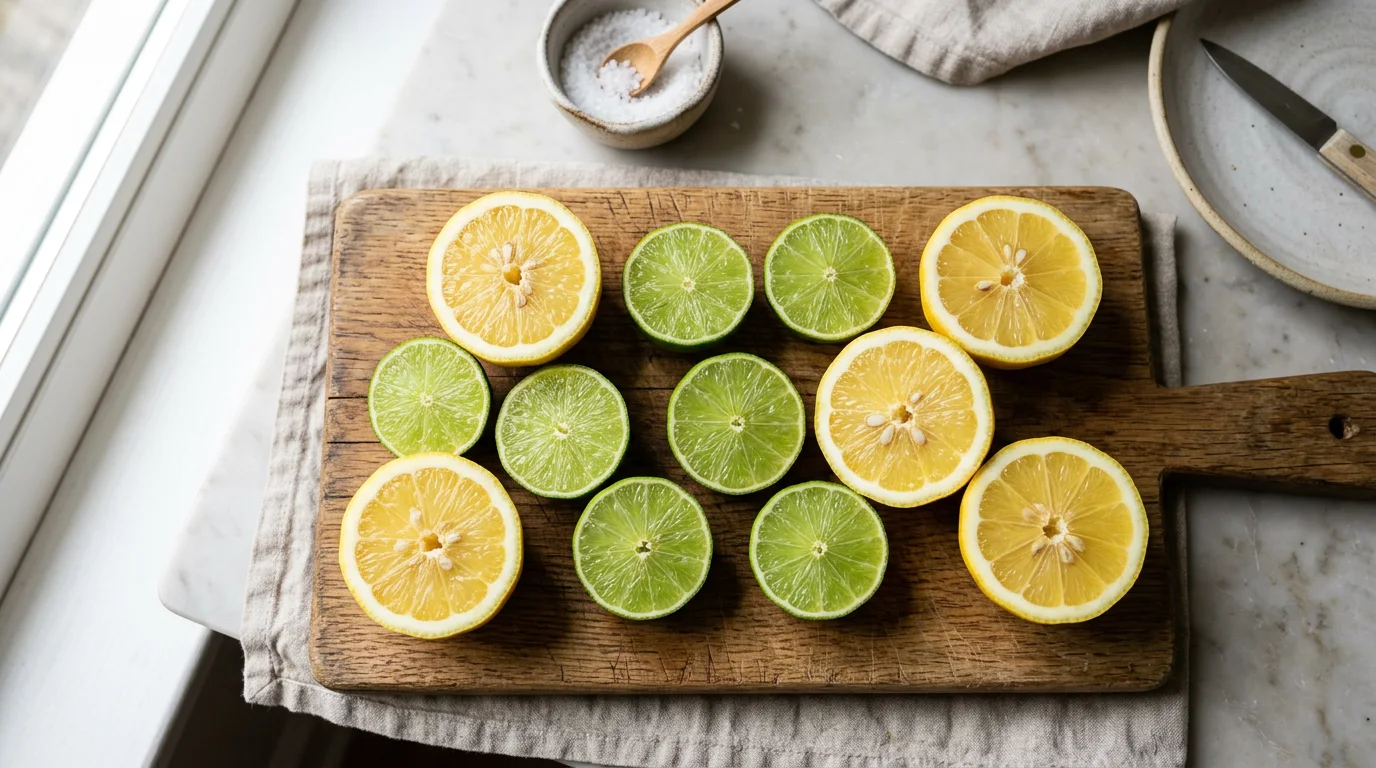
Quick answer: Lemons are larger, more oval, and taste sweeter and sharper, while limes are smaller, rounder, greener, and taste more bitter and floral. Lemons dominate Mediterranean and European cooking and most baking, while limes are the default in Latin American and Southeast Asian dishes, and swapping them changes a recipe's flavor more than people expect.
Lemon and lime look interchangeable at a glance, both tart, both citrus, both landing in the same spot in a recipe’s ingredient list, but they taste different enough that swapping one for the other changes a dish more than most substitutions do. Lemons are sweeter and sharper, limes are more bitter and floral, and which one a recipe was actually written for often matters.
Appearance
| Lemon | Lime | |
|---|---|---|
| Size | 2 to 4 inches | Typically under 2 inches |
| Shape | Oval, pointed ends | Rounder |
| Color | Bright yellow when ripe | Bright green (yellows slightly with age) |
| Skin | Thicker, bumpier | Thinner, smoother |
Flavor
This is where the real difference lives. Lemons carry a brighter, sweeter tartness, the kind that reads as clean and sharp rather than bitter. Limes lean more bitter, with a flavor often described as more acidic and tropical, and that bitterness comes largely from the rind and pith, which is why lime zest tastes noticeably more assertive than lemon zest. Acidity levels between the two are close, with limes testing very slightly higher on average, but the perceived difference in taste comes more from that bitterness than from acid strength alone.
Where each shows up in cooking
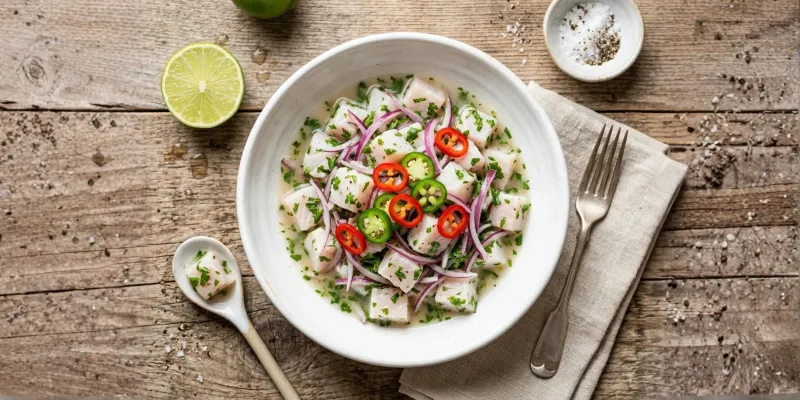
Geography explains a lot of this split. Lime trees grow best in tropical climates, which is why lime is the backbone of Latin American and Southeast Asian cooking, showing up in dishes like Peruvian-style ceviche and countless salsas, marinades, and drinks like Mexican-style limeade. Lemon trees are more associated with Mediterranean and European growing regions, which lines up with lemon’s dominance in dishes like lemon chicken piccata and the vast majority of Western baking, from lemon bars to pound cake.
Desserts favor lemon by a wide margin. Its sweeter, less bitter profile works better against sugar in pies, cakes, curds, and meringues, while lime’s sharper bitterness is more often reserved for savory dishes or drinks where that edge is welcome, like a margarita or a bowl of ceviche.
When you can swap them
For most recipes, lemon and lime juice can substitute for each other 1:1 without ruining the dish, since their acidity levels are close enough that the recipe will still work structurally, whether that’s balancing a vinaigrette or helping a sauce come together. What changes is the flavor profile: swap lime into a recipe built around lemon and you’ll get a slightly more bitter, tropical edge; swap lemon into a lime-forward recipe and it’ll taste a touch sweeter and less sharp.
When you shouldn’t
A few places where the swap is more noticeable and worth avoiding if you can help it:
- Desserts built specifically around lemon’s sweetness, like a lemon curd or lemon meringue pie, can turn unexpectedly bitter with lime, since lime’s rind character comes through more in a cooked, concentrated filling.
- Dishes where the citrus is a defining cultural flavor, like a ceviche or a margarita, will taste noticeably “off” with lemon standing in, even though the recipe will technically still work.
- Zest-heavy recipes, since lime zest is more assertive and bitter than lemon zest, using the same amount called for lemon zest can overwhelm a dish if lime is substituted without adjusting down.
The bottom line
Reach for lemon when you want a brighter, sweeter tartness, especially in baking or anything Mediterranean. Reach for lime when you want that sharper, more bitter edge, especially in Latin American or Southeast Asian dishes. Either works in a pinch as a substitute for the other, but knowing the difference helps you pick the right one on purpose instead of by default.






Comments
Be the first to leave a comment.