
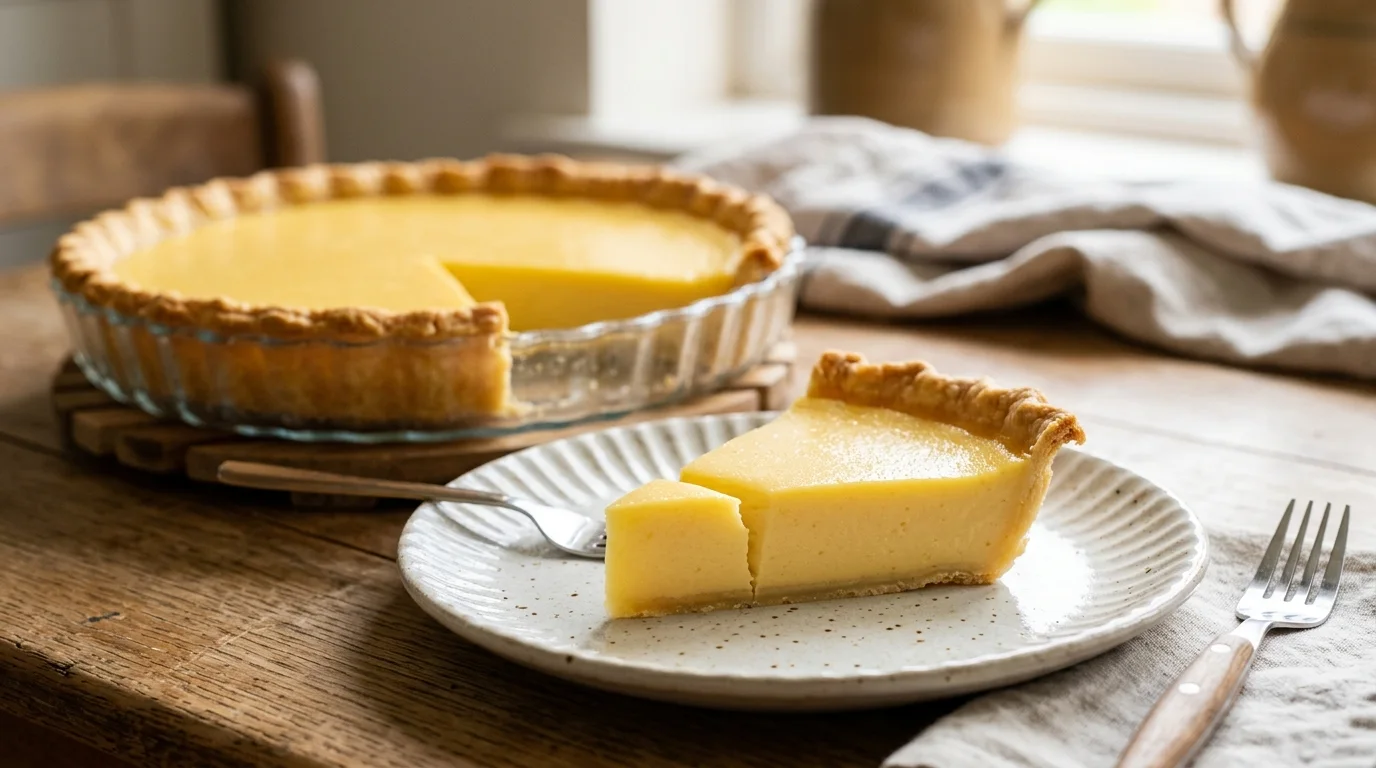
Quick answer: A runny pie filling is almost always one of three things: it hasn't chilled long enough to finish setting, it was pulled from the oven or the stovetop before it actually finished cooking, or a substitution threw off the recipe's liquid-to-thickener ratio. A baked custard like key lime or chess pie needs a genuine jiggle-only test and several hours to chill, while a stovetop curd like lemon meringue's filling needs to reach a full boil before it comes off the heat.
A runny pie filling almost always comes down to one of three things: it hasn’t finished chilling, it was pulled before it actually finished cooking, or a substitution somewhere changed the ratio of liquid to thickener. Which one applies depends on what kind of filling you’re making, since a baked custard and a stovetop curd fail in different ways.
If you made a baked custard (key lime pie, chess pie)
Pies like key lime pie and lemon chess pie set through baking, not stovetop cooking. Their eggs need heat to coagulate into a firm structure, and pulling the pie the moment it looks “mostly set” often means it’s actually still undercooked in the center.
What to look for instead: a slight jiggle confined to the very center of the pie, like set gelatin, not a visible liquid slosh. The edges should look set and maybe slightly puffed. If you’re not sure, an instant-read thermometer reading around 175 to 180°F in the center is a reliable confirmation.
Then it needs to chill, genuinely. Even a correctly baked custard isn’t fully set the moment it comes out of the oven, it needs several hours in the refrigerator (most recipes call for at least 3 hours, and overnight is safer) to finish firming up as it cools completely. Cutting into it too soon looks exactly like a filling that never set, even when the recipe itself worked.
If you made a stovetop curd (lemon meringue pie)
Lemon meringue pie’s filling is cooked entirely on the stove before it ever goes in the crust, usually thickened with cornstarch and egg yolks. This one fails differently than a baked custard.
The most common mistake: taking it off the heat too early. Cornstarch needs to reach a full boil, not just a simmer, and stay there for about a minute for its thickening power to fully activate. A lot of home cooks pull it the moment it looks thick enough while it’s hot, but a cooked curd keeps thickening further as it cools, so it should look slightly looser than your target consistency while it’s still on the stove.
A ratio that’s been thrown off
Sometimes the technique was right but the math wasn’t. Substituting a different size can of sweetened condensed milk, eyeballing a “heaping” measurement of cornstarch instead of a level one, or using bottled juice with a different acidity than fresh can all shift how much thickening power the recipe actually has versus how much liquid it needs to set. This is a good reason to measure precisely rather than by feel, especially for a filling that depends on getting a ratio right rather than just cooking something through.
Can you fix it after the fact?
Often, yes, depending on which failure it was:
- Baked custard, still visibly liquid (not just soft): back in the oven for 5 to 10 minutes at a time, checking each time, until it reaches that slight center-only jiggle.
- Stovetop curd that never thickened: back on the stove, continuing to cook and whisk constantly until it actually reaches a full boil for about a minute.
- Everything cooked correctly, just cut too soon: this isn’t actually broken, it just needs more time in the fridge. Rewrap it and give it the hours it was always going to need.
A pie that was genuinely undercooked and already fully cooled generally can’t be rescued without redoing the filling, but that’s the least common cause of the three, most runny pies are fixable once you know which of these three actually happened.




Comments
Be the first to leave a comment.