
Quick answer: A sunken lemon cake is almost always caused by underbaking, too much leavener or liquid in the batter, overmixing that traps excess air, or opening the oven door too early. Testing doneness with a toothpick in the very center, measuring ingredients precisely, and letting the cake bake undisturbed for at least the first three-quarters of its time all prevent it.
A cake that sinks in the middle almost always comes down to one of four things: it wasn’t fully baked through, the batter had too much leavener or liquid, it was overmixed, or the oven door got opened too early. The fix depends on which one caused it, but all four are avoidable once you know what to check.
Cause 1: Underbaking
This is the single most common reason a cake sinks. If the center hasn’t finished setting when the cake comes out of the oven, it doesn’t have the structure to hold itself up, and it collapses as it cools.
How to catch it: insert a toothpick or cake tester into the very center of the cake, not near the edge where it bakes faster. It should come out clean or with just a few moist crumbs, never wet batter. If it’s not there yet, keep baking and check again in 5-minute increments.
Cause 2: Too much leavener or liquid
Baking powder and baking soda are precise ingredients. Too much of either causes a cake to rise too quickly and too high before its structure (the gluten and egg proteins that hold the crumb together) has had time to set, and once that rise outpaces the structure, the middle collapses back down as it cools. Too much liquid in the batter has a similar effect, weakening the overall structure so it can’t support the cake’s height once it’s out of the oven.
How to catch it: measure leaveners and liquids precisely rather than estimating, and double check you didn’t accidentally double a teaspoon of baking powder into a tablespoon.
Cause 3: Overmixing
Beating the batter too long, especially after flour is added, develops excess gluten and can incorporate too much air. That extra air creates large bubbles that expand during baking and then pop, leaving gaps that cause the structure to sink once the cake cools and the air escapes.
How to catch it: mix just until the ingredients are combined and no dry streaks of flour remain. A few small lumps are fine; a perfectly smooth batter from prolonged mixing is often a sign of overmixing.
Cause 4: Oven issues
An oven running cooler than its display suggests, or a door opened too early in the bake, can both disrupt a cake’s rise. Opening the door lets heat escape suddenly, and if the cake’s structure hasn’t set enough yet, that temperature drop can cause it to deflate on the spot.
How to catch it: use an oven thermometer to confirm actual temperature, and resist opening the door until at least three-quarters of the way through the bake time.
What to do with a sunken cake
A sunken center doesn’t mean the cake is ruined, it’s a cosmetic issue as long as the middle is fully cooked (not raw batter). A few easy fixes:
- Level and flip it. If baked in a loaf or bundt pan, the dip is often less noticeable once the cake is out of the pan and glazed, since the shape reads differently right-side up or inverted.
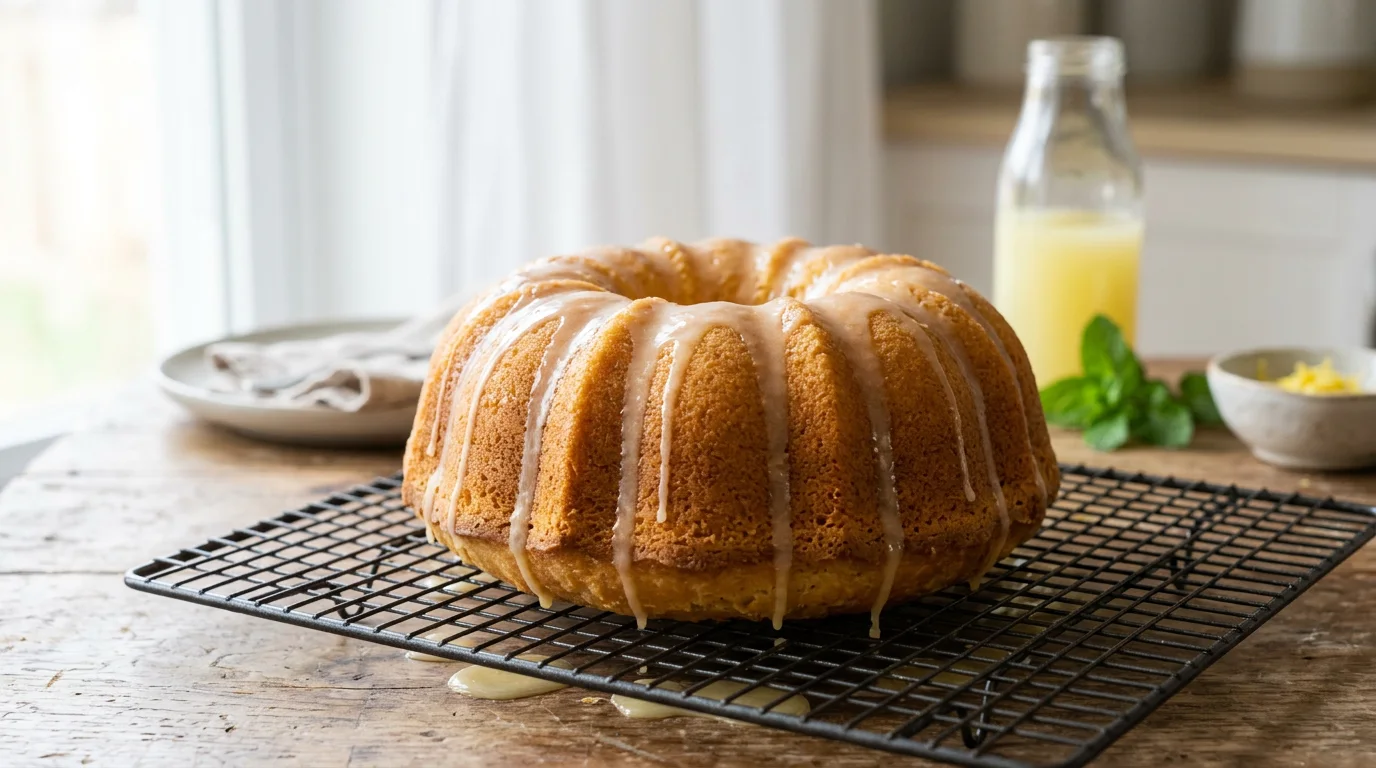
- Fill the dip with frosting or glaze. A lemon glaze poured over the top, the way you’d finish a lemon bundt cake or a lemon blueberry loaf cake, pools into the sunken area and evens out the surface visually.
- Serve it upside down or sliced, where the sink is barely visible, especially in a loaf cake meant to be cut into slices anyway.
Preventing it on the next bake
- Preheat the oven fully and verify with a thermometer if this keeps happening.
- Measure baking powder and baking soda level, not heaping.
- Mix batter just until combined.
- Test doneness in the exact center, not the edges.
- Leave the oven door shut for at least the first three-quarters of the bake.
Getting all of this right is what separates a classic lemon pound cake with a clean, even rise from one that needs a thick layer of glaze to disguise what happened in the oven. For more cakes worth practicing on, browse our lemon dessert recipes roundup.







Comments
Be the first to leave a comment.