
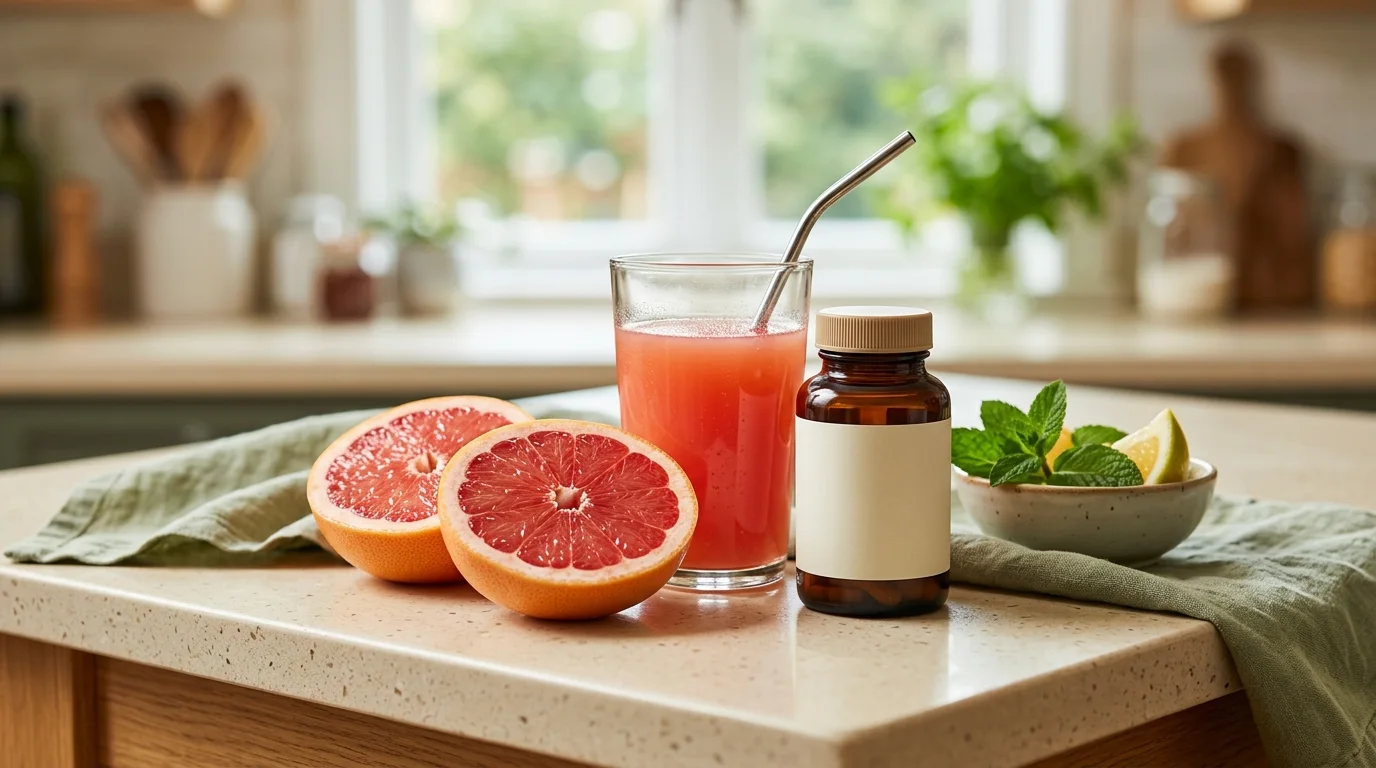
Quick answer: Grapefruit and grapefruit juice can interact with certain medications, including some statins and blood pressure medications, by blocking an enzyme your gut uses to break them down, letting more of the drug reach your bloodstream than intended. Not every medication is affected, but if you take a prescription regularly, check with your doctor or pharmacist before making grapefruit a habit.
Grapefruit and grapefruit juice can genuinely interact with a real, specific list of medications, not as a vague old wives’ tale but as a documented effect involving an enzyme in your gut. It doesn’t affect every medication, and it isn’t a reason to avoid grapefruit if you don’t take an affected drug, but it’s worth understanding if you’re adding something like a grapefruit mocktail to your regular rotation and you’re on a prescription.
Why grapefruit specifically
Grapefruit contains compounds called furanocoumarins that block an enzyme (CYP3A4) living in the wall of your small intestine. That enzyme’s normal job is to break down a portion of certain medications before they fully absorb into your bloodstream. When grapefruit blocks it, more of the drug than intended can get through, effectively raising the dose your body actually receives without you taking any extra pills. Regular oranges and lemons don’t carry meaningful amounts of these compounds, so this is a grapefruit-specific issue, not a general citrus caution.
Which medications are commonly affected
This isn’t a complete or universal list, since it depends on the specific drug and dose, but these are the categories most consistently flagged:
| Medication type | Commonly cited examples | Note |
|---|---|---|
| Statins (cholesterol) | Simvastatin, lovastatin | Can significantly raise blood levels |
| Statins (cholesterol) | Atorvastatin | Affected to a lesser degree |
| Statins (cholesterol) | Pravastatin, rosuvastatin | Generally considered safe with grapefruit |
| Calcium channel blockers (blood pressure) | Felodipine, nifedipine, verapamil | Can lower blood pressure more than intended |
Beyond these two categories, other drug classes can be affected too. This is exactly why checking your own specific medication rather than relying on a general list matters here.
Does timing help?
A common assumption is that spacing grapefruit out from your medication by a few hours solves the problem, similar to spacing out calcium supplements and certain antibiotics. It doesn’t work the same way here. The enzyme grapefruit blocks takes roughly a day or longer to regenerate in your gut, so the interaction isn’t really about digestion timing, it’s about how long that enzyme stays suppressed. Taking your pill at a different time of day than your grapefruit juice generally doesn’t prevent the effect for a genuinely affected medication.
What to actually do
- Check your medication’s label or insert. The FDA requires a grapefruit interaction warning on many affected drugs’ labeling, so it’s often stated plainly rather than buried.
- Ask your pharmacist or doctor, especially if you take a statin or a blood pressure medication regularly. This is a quick question and a genuinely common one they’re used to answering.
- Don’t assume a mocktail-sized serving is automatically safe. There’s no broadly agreed-on safe amount for an affected drug, so a real answer beats guessing based on portion size.
The bottom line
This isn’t a reason to avoid grapefruit across the board, most people take no medication that’s affected by it at all. It’s a reason to ask a real question of a real pharmacist or doctor if you do take a prescription regularly, rather than relying on a vague memory that “grapefruit and pills don’t mix.” This article is general information, not medical advice, and isn’t a substitute for checking your own specific situation with a healthcare provider.

Comments
Be the first to leave a comment.